
| MAKE YOUR OWN | PHOTOS | FOR SALE | TESTIMONIALS | PRICING | CONTACT |
| Gold | Platinum | Palladium | Mokume Gane | Other |
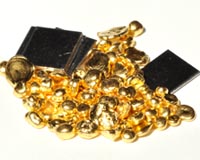
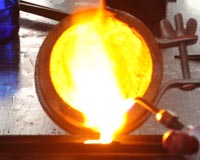
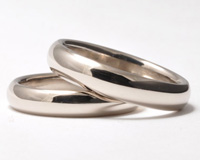
| When making engagement or wedding rings from scratch, your choice of metal is the first step in the design process. I recommend using one of the four precious metals listed above, and have listed brief descriptions of the metals below. I teach jewelry-making classes to make wedding and engagement rings. All three photos above are from the same workshop in which we alloyed white gold to form simple bands. We can also begin with a finished alloy, which will save time and cost less. |
||||
| Gold Rings | ||||
| Gold has been a favorite jewelry metal for thousands of years. It is one of few metals that is found pure in nature. Its malleability allowed ancient civilizations to create fantastic adornments. Today. . . little has changed. Gold is still by far the most popular metal worldwide for wedding rings. We use mostly 18k alloys of gold in my studio because of their superior color, workability, and higher gold content. I also enjoy using 22k or 24k gold for its rich color and softness, and resistance to oxidation for customers wishing to start from scratch by melting the gold and pouring an ingot themselves. Gold can be alloyed into multiple shades of color without losing its beauty and shine. The 18k gold alloy colors available to work with in our workshops are white, yellow, pink, red, green, and peach. 22k gold is available in green, yellow, and red. Each of these shades of gold also have different working properties. White gold is the strongest of the alloys, and is the most popular of the golds used in wedding rings in my workshops. Red and pink golds are hardest, and a little more difficult to work with. Yellow gold, along with all of the high-karat alloys are easier to work with because of their softness and superior malleability. |
||||
| Eco-Gold Rings | ||||
| In light of environmental neglect on the part of much of the mining industry in conjunction with poor treatment of miners and the communities surrounding mines, a movement has begun to reduce the environmental impact of the use of precious metals in jewelry. More agressive recycling along with monitoring mining companies' practices and educating consumers are the core of the movement. Eco-gold is the term used for gold that is obtained from low impact sources. Most often, it is recycled from old jewelry or scrap from jewelry manufacturers. Sometimes, it is obtained from mining companies that adhere to stricter environmental and safety standards. Almost all (99%) of the gold, platinum, palladium, and silver I use in my studio is 100% recycled. All of my customers receive recycled matierials. . . you don't have to ask. The exception are a few items that I cannot obtain from eco-certified sources. I notify customers ahead of time when their designs require the use materials from one of these suppliers. There is usually no cost premium to use eco-gold, recyled platinum, or recycled palladium. |
||||
| Platinum Rings | ||||
| My favorite quality of platinum - and my customers agree - is the fantastic brightness it emits while brazing at 3000° Fahrenheit. A platinum wedding ring is more durable than gold, and has a heavier, more substantial feel. Platinum carries a certain level of prestige over gold. There is also a certain level of prestige to making your own platinum wedding ring, versus gold. Platinum's high density as compared with 18k gold means that more platinum is used in a wedding ring of the same size, so the weight of the ring you design will have a significant impact on the total price. For those who can afford it, a platinum wedding ring is exciting to make. Also, since I charge a flat fee for workshops and a low metals markup, the price difference between making a platinum wedding ring in my workshop and buying a platinum wedding ring in a store is smaller than the price differences between gold. By default, we use a 950 alloy of platinum in all rings (95% platinum). If you prefer to use the less expensive 900 alloy, you are welcome to do so. Recycled platinum is available for those who are environmentally inclined. Our wedding rings are not plated with Rhodium. |
||||
| Palladium Rings | ||||
| Palladium wedding rings have become widely available only in the last few years due to a sharp drop in price as compared to platinum. Palladium is a member of the platinum family of metals and was used for jewelry in the 1940's when platinum was unavailable for jewelry use. Palladium has the similar light weight as silver and is whiter in color than either platinum or white gold. It is also harder than white gold, more scratch-resistant, and holds a terrific polish. It is hypoallergenic. While palladium is most similar in working properties to platinum, it is a little easier to work with and much less expensive. It is most commonly known for and used alloyed with gold to form high-quality white gold. Despite that palladium is nearly unheard of outside jewelry circles, it is an excellent jewelry metal. Its low cost makes it ideal for wedding rings. Palladium's major disadvantage is that it absorbs nitrogen from the air when molten. For this reason, we cannot melt palladium in my workshop and the solders we use are slightly visible in the seams. For a heavy ring, it is well worth the cost savings. On average, palladium wedding rings have cost my customers one thousand dollars less per pair as compared to platinum. For customers on a budget, palladium wedding rings are the clear choice. |
||||
| Mokume Gane Rings | ||||
| This is great stuff. A billet of fused layers of gold can be twisted and formed into amazing patterns. It has a life of its own and each finished ring is unique. The mokume billets available to us are: Yellow Gold & Palladium Red, Yellow, and White Gold White Gold & Sterling Silver Red Gold & Sterling Silver Yellow Gold & Sterling Silver Sterling w/ Yellow & White Gold Sterling w/ Red & White Gold Sterling w/ Yellow & Red Gold The cost of gold mokume gane is similar to the cost of platinum. The cost of the gold and silver mokume is similar to the price of 18k gold. We can make several patterns of mokume gane wedding rings in the studio, including a star, random, seuss, and stripes at different angles. Each billet is hand made so each ring's pattern is unique. While we can usually create stars and stripes reliably, each billet is a little different, and the patterns will vary from ring to ring. |
||||
| Other Materials | ||||
| For the last decade or so alternative materials for wedding rings have become more popular. High precious metal prices and increased market volatility have led manufacturers to begin production of wedding rings from less expensive metals. If you are considering purchasing a wedding ring from an alternative metal, make sure it can be resized. Most peoples' fingers change in size throughout their lifetimes. A wedding ring that does not fit is never a good value. You can scroll down for brief info on: Silver Rings Titanium Rings Tungsten Rings Stainless Steel Rings Ceramic Rings Wood Rings Tattoo Rings |
||||
| Silver Rings | ||||
Silver is the whitest of the jewelry metals and holds the most brilliant luster when polished. While rings that are worn regularly rarely tarnish, they do lose their luster quickly and the copper in sterling makes silver rings slightly less comfortable than gold. However, for shoppers on a budget, silver offers one of the best mixes of beauty and low cost of any metals available. While silver costs much more per ounce than titanium, steel, or tungsten, silver wedding rings tend to be much less expensive due to the abundance of silver jewelry manufacturers worldwide. |
||||
| Titanium Rings | ||||
| I occasionally get inquires about making titanium wedding rings. Titanium is not very malleable, so wedding rings in titanium are usually machined, requiring much less hands-on workmanship. I do not recommend titanium wedding rings because they cannot be resized. Many people have the misconception that titanium is the hardest, most durable metal. While Titanium is extremely durable for its weight, it is softer than steel and scratches. Titanium rings CAN be easily cut and removed in the event of an emergency. While I do not currently offer Titanium Wedding Ring Workshops in New York, we do offer Titanium workshops in San Francisco. You should be able to buy manufactured titanium wedding rings for as little as $15. |
||||
| Tungsten Rings | ||||
| Tungsten carbide wedding rings have been growing in popularity lately. They are promoted on the notion that they are virtually indestructible, highly scratch resistant, and they will last forever - like your relationship. I do not recommend tungsten wedding rings because they cannot be resized. Occasionally, people have accidents that cause their fingers to swell. Tungsten carbide is harder than the steel cutters that most hospital emergency rooms use to remove rings from swollen fingers. Not all ER doctors know how to remove a tungsten ring. If you buy a tungsten carbide ring, make sure to educate yourself on safe removal in the event of an accident. You should be able to buy manufactured tungsten wedding rings for as little as $20. |
||||
| Stainless Steel Rings | ||||
Stainless Steel's low price compared to precious metal has spurred an increase in popularity. |
||||
| Ceramic Rings | ||||
| I have been seeing many more ceramic watches and rings for sale lately. They are made from a lightweight, hard ceramic that is extremely scratch resistant. I am very pleased with my black ceramic ring with a fiberglass inlay. I do not recommend ceramic wedding rings because they cannot be resized. Occasionally, people have accidents that cause their fingers to swell. Ceramic, like tungsten carbide, is harder than the steel cutters that most hospital emergency rooms use to remove rings from swollen fingers. Not all ER doctors know how to remove a ceramic ring. If you buy a ceramic ring, make sure to educate yourself on safe removal in the event of an accident. |
||||
| Wood Rings | ||||
| Wood rings have been touted lately as an eco-friendly alternative to gold rings. I do not recommend wood wedding rings because they cannot be resized. I do not recommend wood wedding rings because they are not durable and can split and discolor. Tiffany offered the Frank Gehry Torque Ring in wood, but discontinued it because of the number of complaints and returns. It's too bad, because I really wanted one of those Torque Rings in ebony. | ||||
| Tattoo Rings | ||||
| Some folks get ring tattoos, rather than wear physical rings. Tattoo wedding rings are bad ass. You don't have to take them off when you operate heavy machinery. You don't have to worry about losing them. I hear finger tattoos are painful... you know you like it. . . and if you get tired of them, you can hide them with gold wedding rings! |
||||
lab-grown diamonds | diamonds | eco-gold | workshop prices | contact
rings for sale | diamond alternative | press | new york | san francisco | home
© 2008 Sam Abbay